Start With The Image You Need
A CCTV design should begin with a question about each view. Do you need to see that someone entered a yard, understand what happened at a loading bay, or identify a person at an entrance? These are different tasks and should not be treated as one general request for coverage.
Write down the events you may need to review and the conditions in which they happen. A camera facing a bright entrance can produce a very different image from the same camera inside a lit corridor. Ask the proposal to describe the intended outcome at each position.
Plan Cameras Around Your Premises
Commercial premises may need a mixture of camera types, lens settings and mounting positions. A high viewpoint can show activity across a yard while giving a poor view of a face. Near an entrance, a more deliberate camera position can provide the detail needed without recording an unnecessarily wide area.
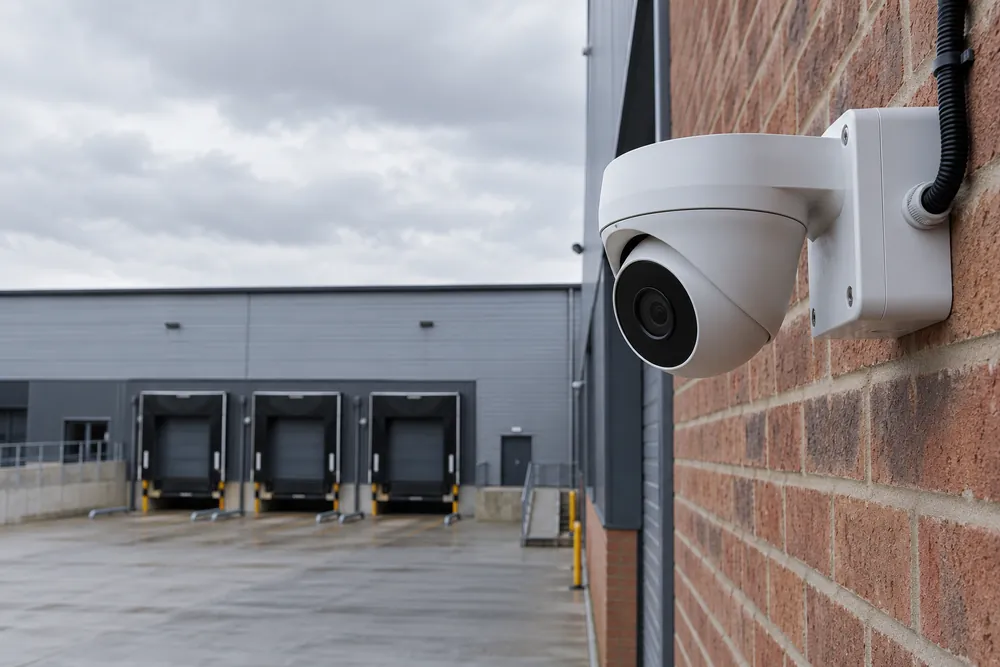
Loading bays introduce vehicle lights, changing daylight and obstructions from parked trailers. Internal stock areas can change when shelving is moved. Review the layout with the people who use the site and flag any planned alterations before agreeing camera locations.
Recording, Networks And Remote Viewing
Recording capacity should follow your purpose and retention decision, not simply the largest disk available. Image quality, recording schedule and the number of cameras influence capacity. Consider how authorised staff will locate a relevant clip and export it without losing the information needed to explain the event.
Ask your IT team about network segregation, administrator access and software support. Remote viewing should use controlled accounts and secure connection methods. Shared passwords and unnecessary public exposure make a system harder to manage, especially when several contractors have worked on it over time.
Data Protection And Technical Standards
UK GDPR and the Data Protection Act 2018 apply where surveillance processes personal data. The Information Commissioner’s Office guidance covers lawful use, clear information for people being recorded, restricted access and retention based on purpose. There is no universal retention period that suits every commercial installation.
BS EN 62676-4 provides application guidance for security video surveillance. NSI’s NCP 104 sets out a structured approach to CCTV design, installation and maintenance. Ask the chosen installer to name the edition and specification being used and explain how the finished images will be checked.
Audio recording and analytics need their own justification. Start with the least intrusive arrangement that meets the documented need, then consider whether extra functions are appropriate. Your organisation remains responsible for its surveillance decisions and should take specialist advice where the processing requires it.
The Installation And Commissioning Process
Begin with a walk-through of the premises, existing equipment and incidents you want to understand. Agree camera positions and sample views, check lighting and identify power, cable and recording locations. Specify any areas that should be excluded or masked.
Installation should protect cabling, keep equipment accessible for maintenance and avoid unnecessary disruption to operations. At handover, check live and recorded views, timestamps, search functions and export. Where night performance is important, agree how that will be verified rather than relying on a daytime demonstration.
Keep a camera schedule and a record of access permissions. Staff need to know how to preserve relevant footage, who can authorise release and who to contact if recordings stop. A system is much easier to operate when these decisions are made before an incident.
What Affects Commercial CCTV Costs
Camera numbers alone do not define the price. Cable distances, external routes, mounting height, lighting, recording needs and network changes affect the work. Existing cameras may be retained when compatible and suitable, but a survey should check whether they produce useful images.
Compare quotations against the same camera schedule and recording requirements. Ask about licences, software updates, remote access charges and maintenance. An apparently lower quote may leave out access equipment, night testing or the work needed to provide a usable export process.
Useful Technical Guidance
For the guidance behind these considerations, see NSI Commercial CCTV Guidance, ICO Surveillance Guidance. The applicable requirements should be confirmed for your specific premises.
CCTV Installation: Your Questions
How Long Should Business CCTV Footage Be Kept?
Business CCTV footage should be kept for the shortest period needed for its stated purpose. The ICO does not prescribe a universal retention period. Document your decision, configure automatic deletion and review it when the purpose changes, while preserving relevant footage separately when it is needed for a specific incident.
Can Existing CCTV Cameras Be Reused?
Existing CCTV cameras may be reusable if their condition, image quality and compatibility meet the new design. The survey should check cabling, recording equipment and software support as well as the cameras. Retaining a poor view just because it still produces an image can leave the original security problem unresolved.